ב"ה


Who hasn’t heard of Abraham and Sarah? The founders of the Jewish people who together stood up to a world that chose to ignore the existence of a divine creator. But, how well do we know them, the two people that are responsible for our existence? In this course, we will delve into what made Avraham and Sarah so special as individuals, and what made them so effective as leaders and trailblazers.

In a culture of “live and let live” you might convince yourself that another person’s religious commitments are none of your business. But ask yourself what you’d do if you truly cared about your fellow’s welfare. And why should someone’s spiritual needs be any less important than their physical needs.


In a culture of “live and let live” you might convince yourself that another person’s religious commitments are none of your business. But ask yourself what you’d do if you truly cared about your fellow’s welfare. And why should someone’s spiritual needs be any less important than their physical needs.


Likutei Sichos vol. 25 Lech-Lecha, sicha 3
The Torah tells us that Hashem changes Abraham’s name from Avram to Avraham, which means “a father to a multitude of nations”, instead of “a father to the nation of Aram”. The Rebbe uncovers great depth in Rashi’s commentary on why the letter belonging to the old native name stayed on in the new all-inclusive name.

What gives you the right to ask G-d for more than what you're given? During a severe drought, a sage pushes for rain, but when it finally comes, it doesn't come properly. Too little, then too much, until it becomes unlivable. Each time, he goes back and demands better from G-d in a way most people wouldn't dare. This lesson brings into focus the tension between accepting what you're given and insisting on something better. Is it audacious to ask G-d for more, or is it exactly what He wants? And what does it take for your prayers to be answered?


Who hasn’t heard of Abraham and Sarah? The founders of the Jewish people who together stood up to a world that chose to ignore the existence of a divine creator. But, how well do we know them, the two people that are responsible for our existence? In this course, we will delve into what made Avraham and Sarah so special as individuals, and what made them so effective as leaders and trailblazers.


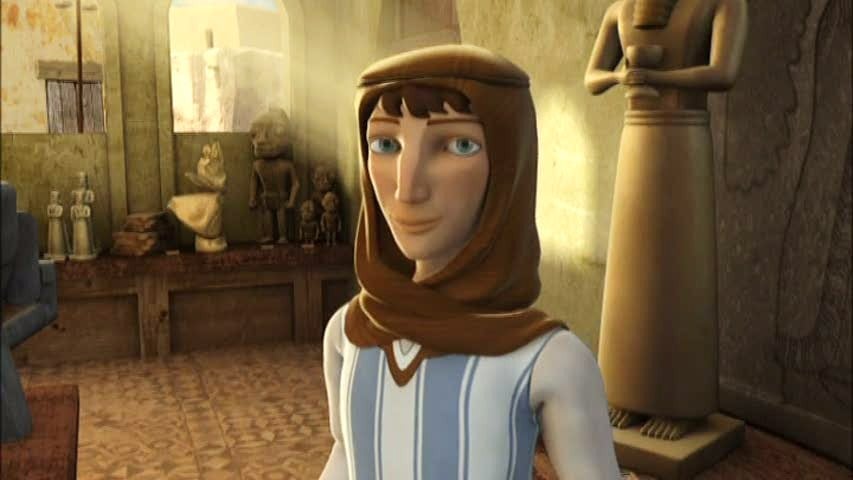
Smashing Idols
The famous story from the Midrash about how Abraham destroyed the idols in his father's shop. An excerpt from the full DVD “Young Abraham”.


The Reward for Abraham’s Humility
When Abraham entreats G-d to spare Sodom and Gomorrah, he prefaces his request with the acknowledgment that he is but dust and ashes. In reward for his humility, two unique mitzvahs are granted by G-d to his descendants, the Children of Israel. This class will explore the connection between these particular mitzvahs and Avraham's humility, revealing the inspiring message contained therein. (Likutei Sichos vol. 25)
This class is dedicated in memory of Rabbi Shmuel Azimov, of blessed memory.


Almost incidental of a primary biblical narrative, in what might be termed a moment of “divine candor,” G-d “drops the curtain” sharing the secret of why he so loves Abraham. It seems reasonable to say that the importance of this verse cannot be overstated – as it's nothing short of an extraordinarily revealing statement by our Creator about how to best nurture our relationship with Him. And in turn, we can learn how to best cultivate and maintain our personal relationships as well!


Does the Torah allude to today’s chilling current events?
Parshat Vayeira contains a curious narrative about a huge ball held to celebrate Isaac’s coming-of-age. An exploration of this event, via little-known, yet trusted sources, lays bare fascinating details—as the investigation segues into secret bible codes that seem to compellingly allude to the present day Iranian showdown with Israel.

Parsha Curiosities: Vayeira
Isaac's baby bash attracts some pretty rude guests and crude comments. In trying to understand the irreverent behavior of an oversized world leader, a surprising narrative emerges in a remarkable true story of the Biblical origin of the proverbial rocking cradle and accompanying lullabies. In developing this unusual thesis about the foundational essence of a Torah education; a variety of fascinating facts, figures and fetishes are picked up along the way.

The opening narrative of Abraham's hospitality is punctuated with repetitive descriptions of great haste. Rather than incidental, these details emerge as a compelling pattern – but the actual messaging isn't obvious. What exactly is the Torah trying to tell us?! This investigation of our founding father’s famous hospitality ultimately provides incredible insight into the inner workings of Abraham's kindness – ultimately guiding and illuminating our own Jewish ethos of sharing and caring today.





Children’s Rally, 25 Kislev, 5741 • December 3, 1980
The Chanukah battle and victory were immortalized by the Sages. The candles evoke the memory of the small group of Jews who fought those who had opposed the Torah.
Today, we each battle our own evil inclination as well. Our victories, as well, will be eternally remembered.
Our current mission and battle is for the coming of Moshiach, as we request three times a day during prayer. Although we only request his coming three times a day, we yearn for him “all day”!



7th Night of Chanukah, 5748 · December 21, 1987
When a Jew celebrates Chanukah, he may be confronted: “You Jews are so few compared to
the nations of the world. Yet you hold fast to your customs and commandments, ignoring what
the billions of non-Jews around you think and do… Wherein lies your strength to stand in the
face of such odds?”

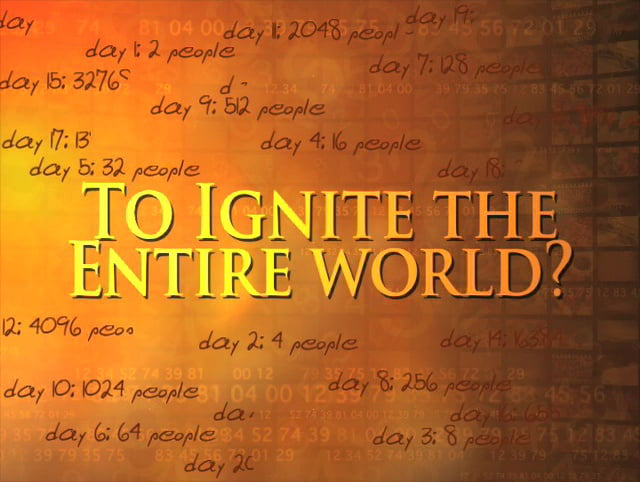
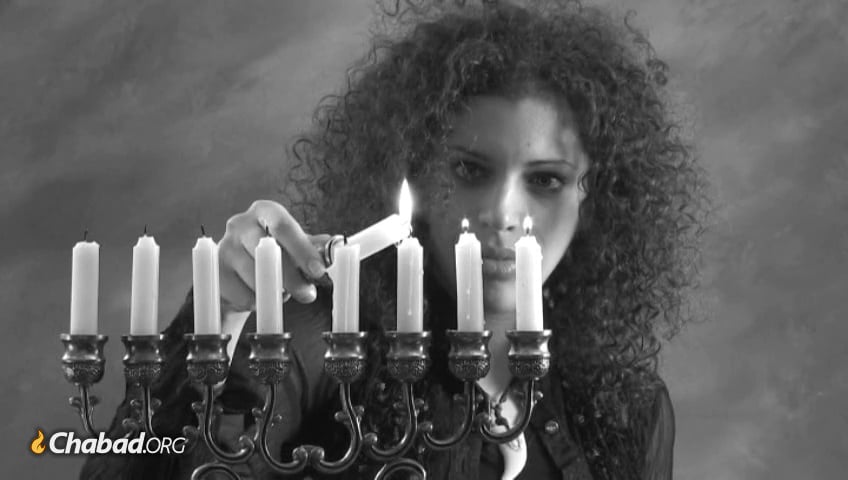



Chanukah reminds every Jew that it is G-d’s eternal mandate to carry the torch of His
“Mitzvah-candle and Torah-light.” With most Mitzvos, the “candle” and “light” are not
physically visible. But with the Chanukah candles we see how fulfilling the Mitzvah creates
actual physical light that illuminates all one’s surroundings.


Two Versions of the Timeline of the Maccabee's Victory
Among the early Talmudic commentaries, there are two opinions about the chronology of events commemorated on Chanukah. One says that the war was won on the 24th of Kislev and that the first day of Chanukah, the 25th of Kislev, is the anniversary of the first day of peace. The other says that on one day, the 25th of Kislev, the Maccabees both won the war and rededicated the Temple.


Get the Chabad.org Video app